
Three years ago this week, on November 2, 2023, CNX and Governor Josh Shapiro stood together in Claysville, Washington County, and signed a Statement of Mutual Interest unlike anything the natural gas industry had seen. The unique public-private commitment was straightforward: monitor air and water quality around CNX operations, disclose every chemical intended for drilling and hydraulic fracturing before it is used, and put the raw data in front of the Pennsylvania Department of Environmental Protection (DEP) and the public.
CNX called it Radical Transparency — open-source, real-time environmental data in place of speculation. Three years in, the results are measurable, and the program is bigger than ever.
From two well pads to more than a million data points
Radical Transparency started small and grew steadily. In December 2023, CNX began posting live air quality results from two well pads in Washington and Greene counties, alongside full chemical disclosures for both sites. By April 2024, live monitoring covered nine sites — seven active well pads and two compressor stations. Since launch, the program has continued to expand to include monitoring with new development across CNX’s operating footprint and has become a standard operations component. Monitoring follows CNX’s activity plan: every new well site constructed, every new well drilled, every major midstream location. There is no cherry-picking. Where CNX operates, so does Radical Transparency.
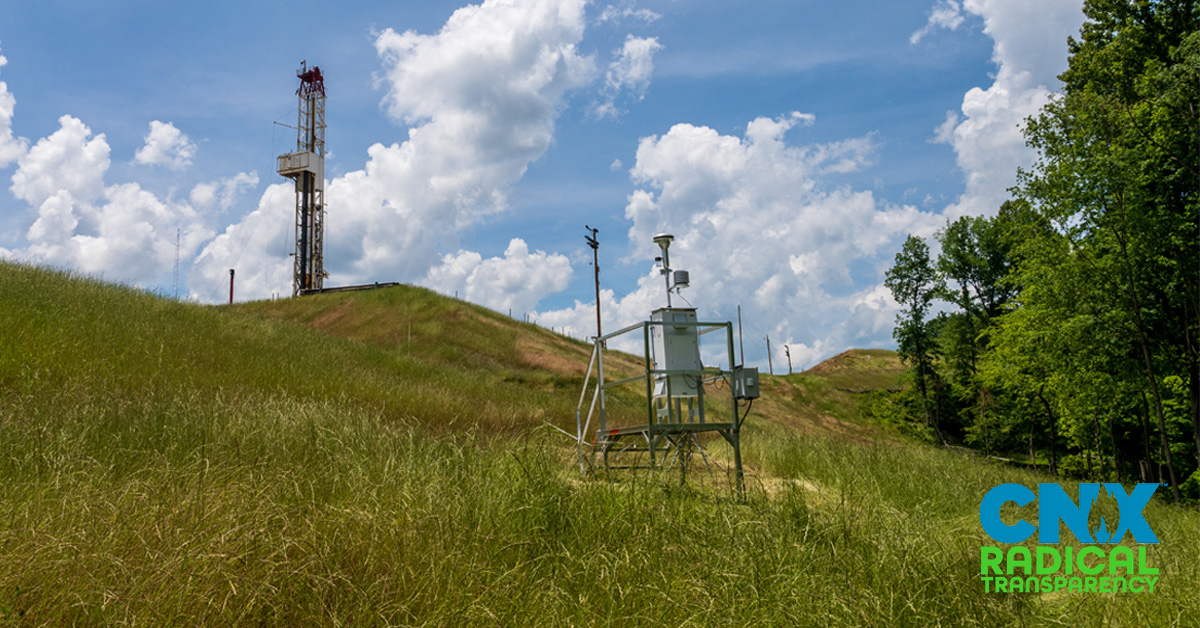
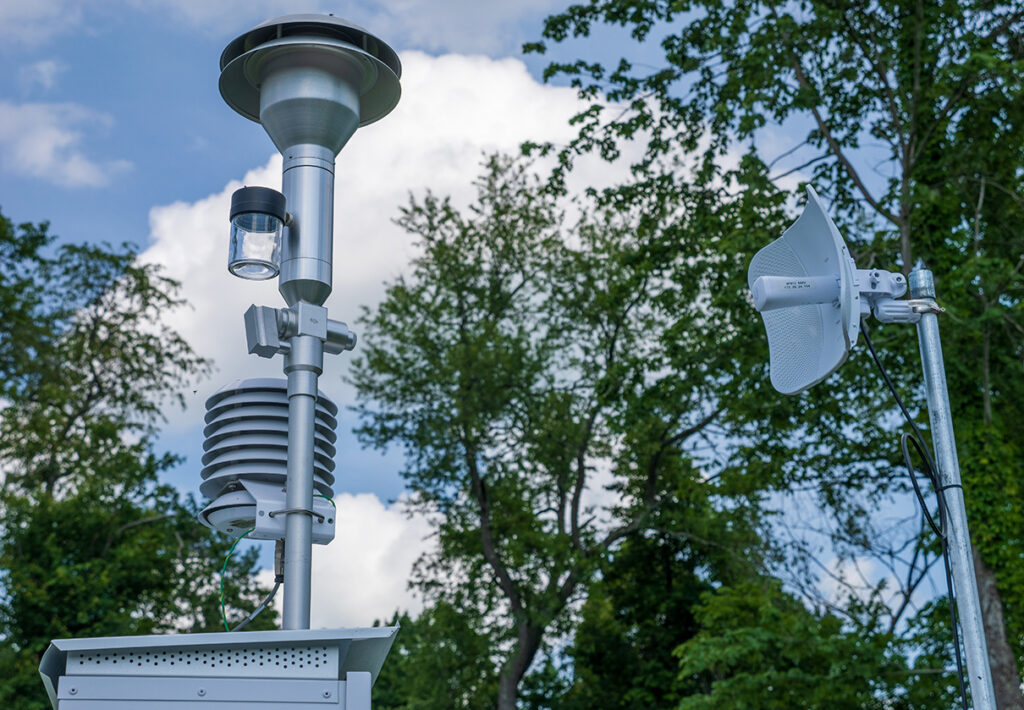
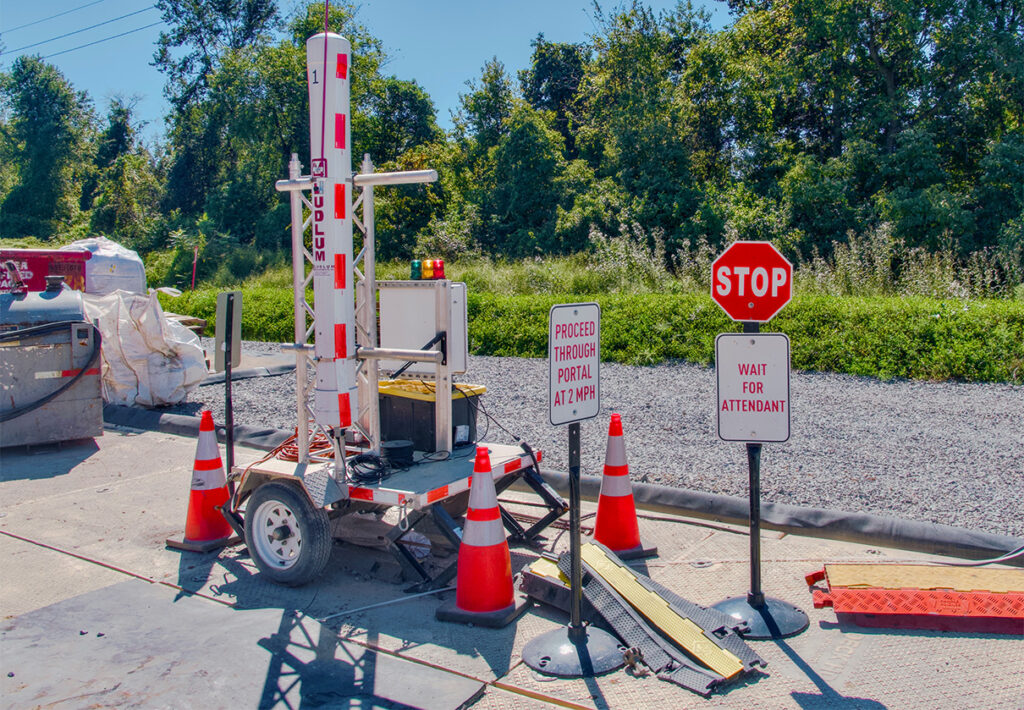
Every site gets, at minimum, two continuous PM2.5 monitors — one upwind to capture background levels, one downwind to capture the site’s contribution — plus passive BTEX samplers arranged around the site following EPA Method 325. CleanAir Engineering, an accredited third party, collects the raw data and delivers it to DEP and CNX simultaneously.
The data set has grown consistently. Air quality monitoring alone now exceeds 1.25 million data points.
What three years of data shows
For years, the debate over natural gas development has leaned on modeled estimates and studies that infer impacts from a distance. Radical Transparency measures them on site. The findings have held steady from the outset:
-
No exceedances of the EPA’s 24-hour PM2.5 National Ambient Air Quality Standard attributed to ongoing CNX activity at any monitored site.
-
BTEX concentrations near regional background levels and below the Agency for Toxic Substances and Disease Registry’s minimum risk levels for acute and chronic exposure.
-
Emission events during drilling and completions that are infrequent and short-lived, tied to activities that typically last less than six months.
Water is part of the picture too. CNX samples private drinking water supplies within 2,500 feet of a wellbore — four quarterly samples before and after drilling, exceeding regulatory and industry standards — with results published where landowners consent.
Three years of measurements show natural gas development and healthy communities go hand in hand.
Put simply: across more than a million measurements, CNX has found no evidence of impacts from its operations that would harm human health or degrade local air quality. The data works inside the company, too. CNX uses it to spot trends, refine operations, and reduce emissions.
Taking the data to the experts
Radical Transparency was built to be scrutinized, and CNX has taken it where scrutiny happens. In February 2025, the company briefed DEP’s Citizens Advisory Council on the program. That April, CleanAir Engineering’s Dr. Doug Goetz presented an independent analysis of the aggregated data to air quality scientists and regulators at the Air & Waste Management Association’s Air Quality Measurements Conference in Denver. Program leaders have also presented at the Marcellus Shale Coalition’s Shale Insight conference in 2024 and 2025.
The collaboration has shaped policy, too. It helped inform DEP rulemaking requiring broader chemical disclosure across the industry. In May 2025, DEP launched what the Shapiro Administration calls the most intensive independent study of unconventional natural gas wells in the nation, monitoring a CNX well pad in Washington County before, during, and after development. And when the Environmental Quality Board considered a petition to expand setbacks to more than six times current requirements, CNX put its data on the record: the measurements do not support the expansion.
Along the way, CNX added new layers of disclosure, including a quarterly ESG Performance Scorecard in place of a static annual report and a public page listing every notice of violation received from federal, state, and local agencies.
Year three: radiation
In September 2026, CNX announced the program’s next evolution: continuous ambient gamma radiation monitoring at unconventional well pads and certain produced water facilities, covering every phase from drilling through production. Onterris, an accredited third party, collects the raw data and delivers it to CNX and DEP simultaneously, and CNX displays it publicly in real time. CNX also publishes the radiation surveys it conducts on waste leaving its sites, updated as waste is hauled daily.
None of this disclosure is required by regulation. As CNX President and CEO Alan Shepard said at the recent announcement, “Radical Transparency was never meant to be a program with an end date.”
Year four and beyond
Three years in, CNX sees the anniversary as a checkpoint, not a finish line. “Three years ago, we made a promise to our neighbors to show them, not just tell them, what our operations look like,” said Alan Shepard, CNX President and CEO. “I’m proud of the team that has kept that promise every single day, using the data to keep improving how we operate and staying responsive to the communities where we live and work.”
The next chapter is already underway. “Adding radiation monitoring data to the Radical Transparency program provides a more complete environmental picture and expands the publicly available dataset for communities, regulators, and researchers,” said Carrie Crumpton, Vice President of Environmental Strategy. “Looking ahead, DEP’s air quality monitoring effort will shift this winter from greenfield site to active operations, providing additional real-world data to further strengthen transparency and scientific understanding.”
That shift is exactly what DEP designed its study to capture. When the study launched in May 2025, DEP Secretary Jessica Shirley said, “DEP’s air quality monitoring will be there for all stages of the well – collecting background data before the well is even drilled, and monitoring during the well construction, drilling, hydraulic fracturing, and early production phases.”
The invitation hasn’t changed. CNX continues to encourage others in the industry to adopt similar programs, community stakeholders to engage with the data, and policymakers to reject ideological positions and base future regulations on actual measurements.
Three years ago, Radical Transparency was a commitment on paper. Today, it’s more than a million data points anyone can scrutinize. So, after three years and over a million data points, the story is: there is no story.
Explore the live data at the Monitoring Sites page at CNX.com, and learn more via the ongoing Radical Transparency “Context Corner” series.