
Hey, Carrie . . . Why Did PM2.5 Go Up Across the Region Just Ahead of the Fourth of July Weekend?
If you noticed PM2.5 concentrations trending upward across the region during the recent stretch of extreme heat leading into the Fourth of July weekend, you weren’t imagining things.
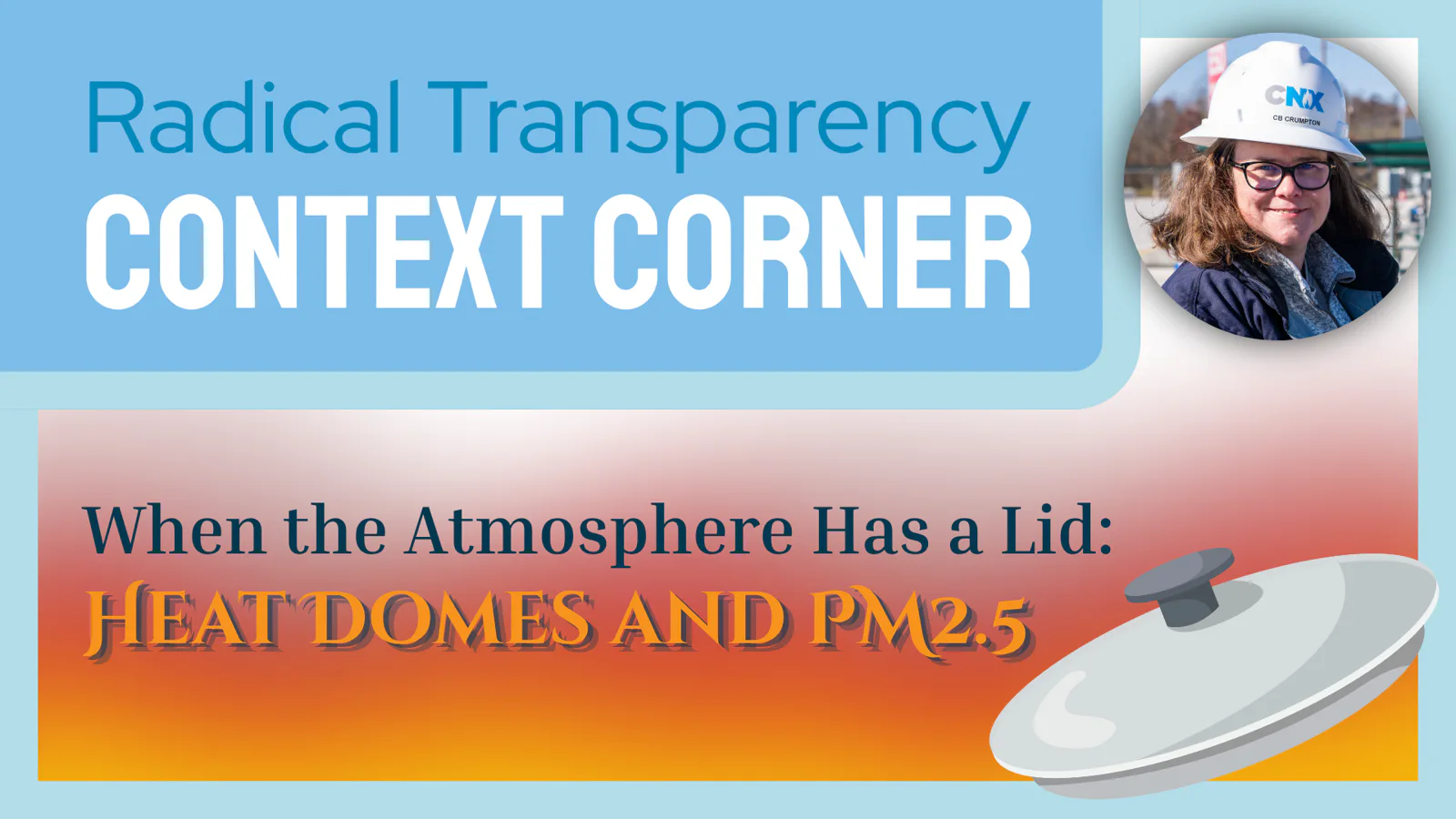
One of the biggest reasons was the presence of a “heat dome” — a large area of high pressure that settled over much of the eastern United States and created stagnant atmospheric conditions that allowed pollutants to accumulate near the ground.
First Things First: What Is a Heat Dome?
A heat dome forms when a strong high-pressure system becomes established over a region and remains in place for several days. Air beneath the high pressure slowly sinks, creating a stable atmosphere that suppresses vertical air movement and limits ventilation.
Think of it as placing a lid on a pot. Under normal conditions, the atmosphere does a pretty good job of mixing and dispersing pollutants. During a heat dome, that natural mixing process slows down, causing pollutants to become trapped closer to the surface.
Why Does PM2.5 Increase?
PM2.5 consists of microscopic particles that are small enough to remain suspended in the atmosphere for extended periods. Under normal meteorological conditions, wind and atmospheric mixing help dilute and transport these particles away from their sources.
During a heat dome, however, several things happen:
-
Winds are often lighter, reducing pollutant dispersion.
-
Vertical mixing is suppressed, allowing particles to remain concentrated near the ground.
-
Emissions from vehicles, industrial facilities, power generation, construction activities, and other routine sources continue to enter the atmosphere day after day.
-
Smoke, haze, and other fine particles have fewer opportunities to disperse and can build up across larger geographic areas.
The result is often a gradual increase in PM2.5 concentrations across an entire region rather than a sharp spike at a single location.
In many cases, emissions themselves have not increased significantly; instead, the atmosphere has become less efficient at “cleaning itself,” allowing particles to accumulate over time.
How Long Do Heat Domes Last?
Unlike a passing storm system, heat domes can be remarkably persistent.
Most heat domes last anywhere from three to seven days, although stronger events can remain in place for a week or even several weeks before a change in the weather pattern breaks them down. The recent heat dome covering southwestern Pennsylvania lasted from around June 25 to July 3, with some lingering effects into July 4.
This is important from an air quality perspective because pollutant levels can gradually build over the life of the event. The longer stagnant conditions persist:
-
The more pollutants accumulate near the surface.
-
The less effective the atmosphere becomes at dispersing emissions.
-
Overnight temperature inversions can further trap pollutants until daytime heating allows some mixing to occur.
The Bottom Line
The elevated PM2.5 concentrations observed during the recent heat event were largely driven by meteorology.
A persistent heat dome created hot, stagnant conditions that reduced atmospheric mixing and ventilation, allowing fine particulate matter to accumulate across the region. Emissions from everyday sources continued to enter the atmosphere, but the atmosphere itself became much less effective at dispersing them.
Context Corner Takeaway
When a heat dome settles over the region, think of it as placing a lid on the atmosphere. Even when emissions remain relatively steady, PM2.5 concentrations can increase because pollutants become trapped near the ground and accumulate day after day. The longer the heat dome lingers, the greater the opportunity for that buildup to occur. In many cases, what we’re observing isn’t necessarily an increase in emissions, it’s a decrease in the atmosphere’s ability to disperse them.