
By mid-October, bats are everywhere: on home decorations, classroom windows and costume-store shelves. The real ones are busy too, and what they do in these weeks helps decide which of them see spring.
This fall, CNX is bringing that message to its communities.
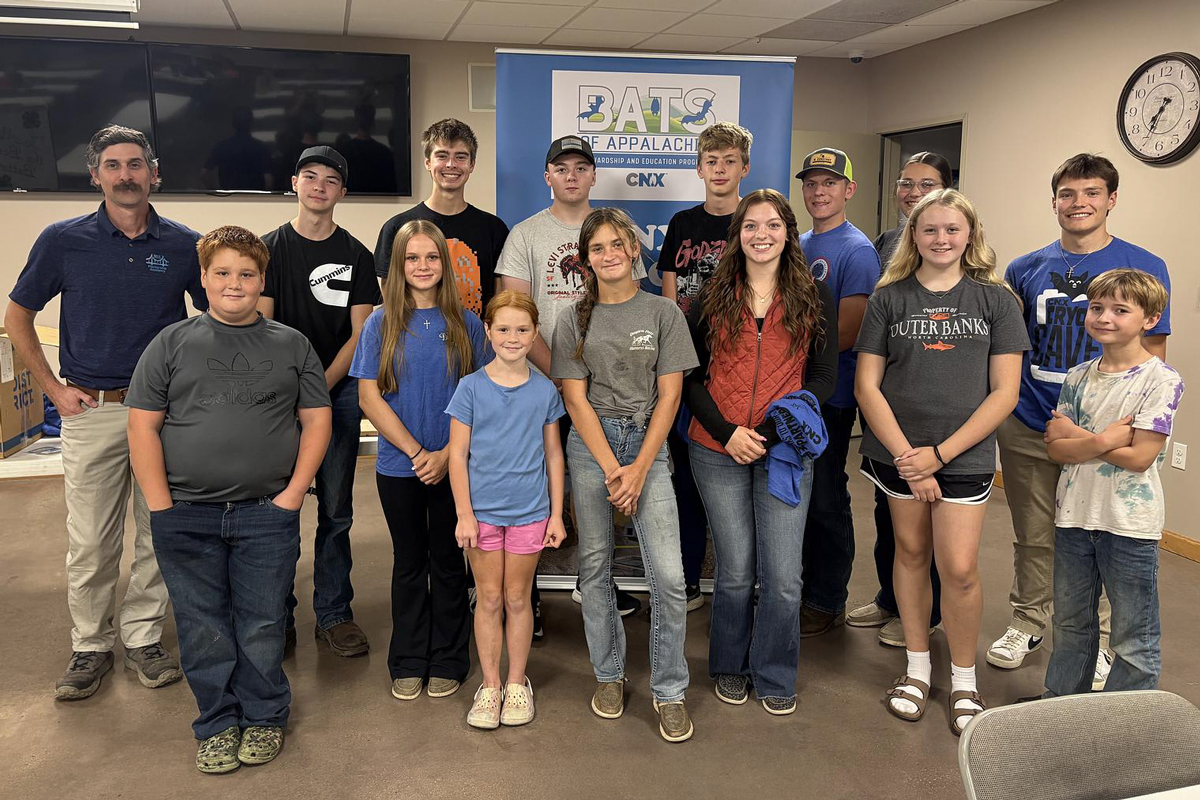
Recently, the CNX team led bat talks for the Jefferson College Historical Society in Canonsburg on September 14 and for the Kiski 4-H at the Kiski Fire Hall on September 17. The goal was simple: help neighbors better understand an often-misunderstood animal as it enters one of the most demanding stretches of its year.
Fall is not a quiet season for bats
Appalachian bats do not all spend the winter the same way. Pennsylvania has nine regularly occurring species. Six hibernate in the state, and three mostly migrate south, according to the Pennsylvania Game Commission.
For migrating species such as the eastern red bat, the trip south can begin in September or October. For species that stay, fall brings what biologists call “swarming.” From mid-August into November, depending on the species, bats gather at night around the caves and old mines where they will spend the winter. They mate, scout their winter shelter and keep feeding.
That feeding matters. Insects grow scarce as nights get colder, and every remaining warm evening is a chance to build the fat a bat must live on until spring. Federal wildlife guidance notes that losing fall roosting and foraging habitat near hibernacula can reduce fat accumulation and, in turn, overwinter survival.
Hibernation starts on a staggered schedule. Tricolored bats may settle in as early as September. Little brown bats move into caves, mines and tunnels in October and November. Big brown bats are among the last to go, sometimes waiting until December. Timing shifts with species, weather and elevation, so on any given October night some bats are flying south, some are swarming and some are already tucked in.
Why it matters now
Bats reproduce slowly. Most species have only a single pup per year, so depleted populations take a long time to recover.
Hibernating bats also face white-nose syndrome, a fungal disease that disrupts hibernation. Infected bats wake more often, deplete stored fat faster and may starve before spring. The Pennsylvania Game Commission reports an overall 99 percent decline among the six bat species that hibernate in the state.
That is what makes fall disturbance costly. A bat startled from a swarming site or a winter roost spends energy before insects return in spring. The Game Commission asks recreational cavers to stay out of hibernation sites from Oct. 1 through April 30.
The payoff for protecting them is large. A nursing female bat can eat her own weight in insects in a single night, and a little brown bat can catch 1,200 insects in an hour. Fewer bats means more mosquitoes in backyards and more crop pests in farm fields.
What the September talks covered
Dan Bitz, CNX’s director of permitting, led both sessions. He opened with a brief overview of CNX and how its work with bats fits into the company’s broader commitment to environmental stewardship, then covered bat facts and why bats matter, echolocation, bat boxes, how to safely handle encounters between people and bats, white-nose syndrome and the CNX Cryo Cave.
In Kiski, the audience included young 4-H members, many of whom spend their time outdoors raising animals and working land where bats keep insects in check. In Canonsburg, the talk reached residents who care about the community’s long history, including its natural history. Both audiences were curious and engaged, with thoughtful questions throughout. And by the end, attendees were already talking about places around their communities that could host a box through the CNX community bat box program.
From a backyard box to a winter cave
The talks are one part of CNX’s year-round bat stewardship work.
-
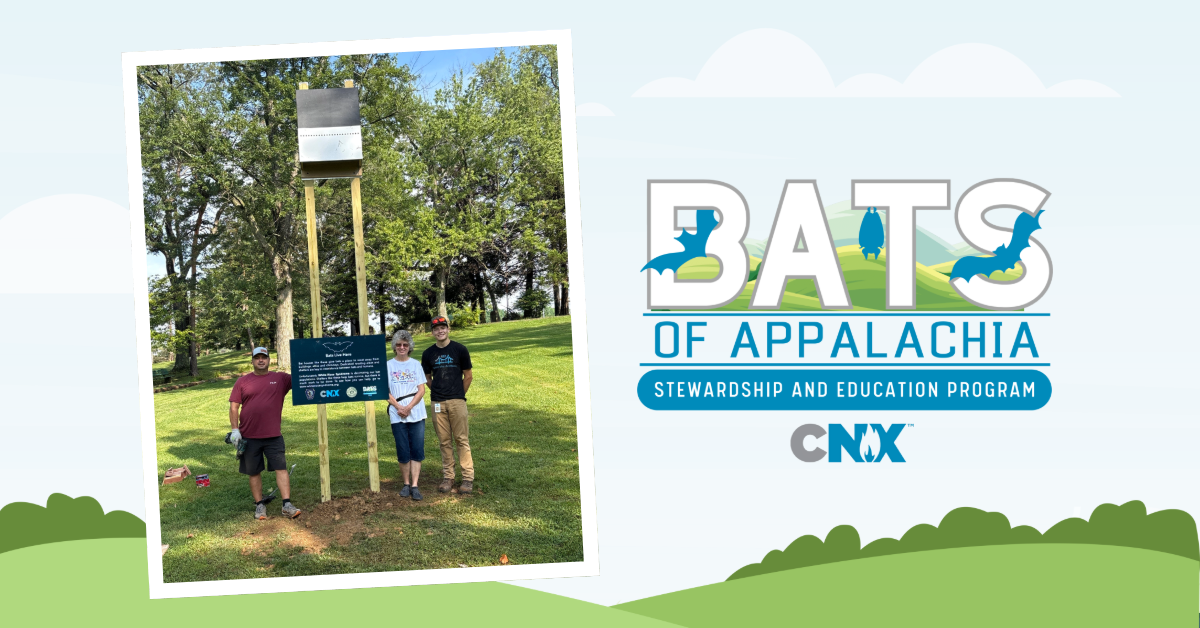
Summer roosts close to home. CNX’s community bat box program, started in 2019, has placed 25 seven-chamber boxes with about 15 community partners. CNX employees build the boxes to a Pennsylvania Game Commission-endorsed design. CNX provides and installs each box at no cost. On Sept. 4, a CNX team added a box at Monessen City Park, giving bats an alternative to residents’ attics. Boxes like these are warm-season roosts; bats typically find and use them in spring and summer.
-
Education year-round. Talks like those in Canonsburg and Kiski help neighbors understand what bats need and how to give them room.
-
Winter shelter. In Greene County, the CNX Cryo Cave is a first-of-its-kind artificial hibernaculum, designed to shelter federally endangered and threatened bats through the winter. CNX collaborates on it with partners including the U.S. Fish and Wildlife Service and the Game Commission.
The work reflects CNX’s Tangible, Impactful and Local approach to stewardship: pairing practical habitat support with education in the communities where employees live and work. It also supports the broader Appalachia First commitment to use local partnerships and resources to strengthen the region.
How to help this fall
-
Watch at dusk, not up close. A clear October evening near a pond or woodland edge is a good time to spot bats feeding.
-
Leave caves and old mines alone. Fall swarming and winter hibernation are when disturbance costs bats the most.
-
If a bat gets into your home, call a professional or the Game Commission. Never handle a bat with bare hands.
-
Interested in hosting a box? Community organizations and schools can contact CNX at communityrelations@cnx.com.
So as plastic bats appear on porches this month, take a moment to think about the real bats overhead. On fall nights across Appalachia, they are migrating, mating, feeding and finding the shelter that will carry them through winter.